EnviroDek Epoxy Flooring Contractor in Atlanta, GA

Services

Envirodek offers a full range of concrete coating services for garages, basements, pool decks, driveways, and commercial spaces. We handle prep and repairs, then build the right system—epoxy, polyaspartic, or urethane—with optional slip resistance for safety. Choose solid colors or decorative flake and quartz blends for a clean, durable surface that resists traffic, stains, and weather. Most projects install in 1–2 days with low odor and minimal downtime, and include a written warranty. Explore: Garage Floor, Pool Deck, Basement Floor, Driveway Resurfacing, Concrete Floors, and Commercial. Schedule a free on‑site estimate to review samples and get a detailed scope.

6. Decorative Epoxy Floor
Garage Floor

Decorative Epoxy Floor: Flake, Quartz, Metallic, or Solid Color?

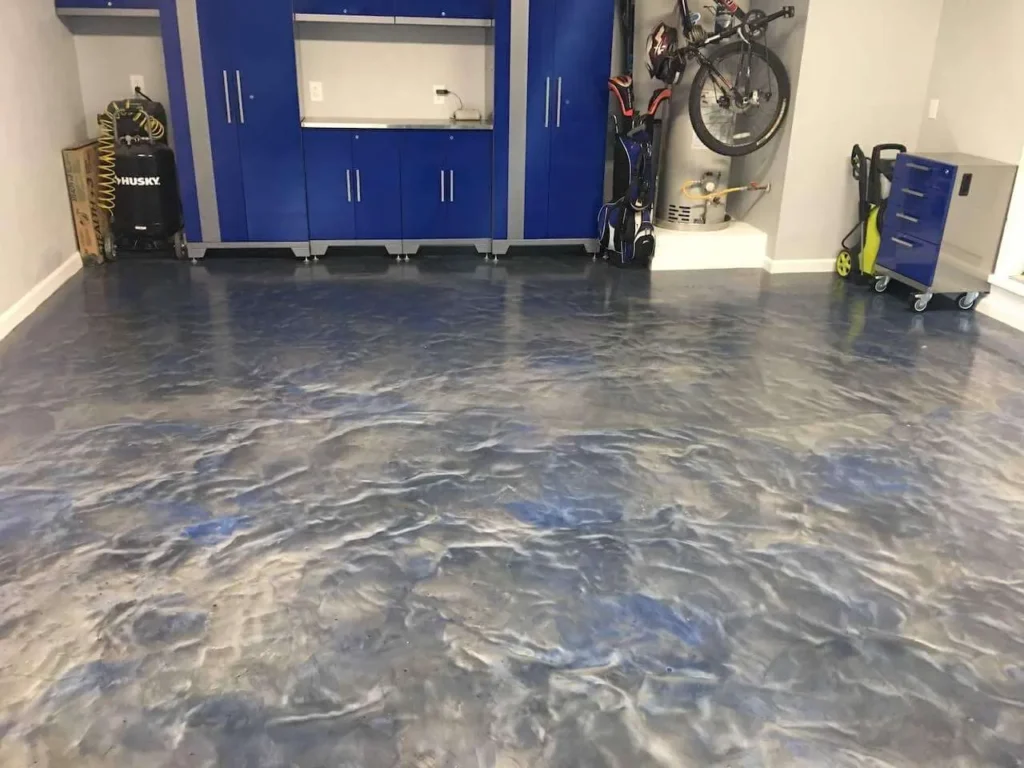
A decorative epoxy floor can turn plain concrete into a more finished, custom-looking surface while keeping the durability that makes concrete practical. But not every decorative floor should look or perform the same way. A garage, basement, showroom, retail space, office, workshop, and commercial interior all place different demands on the floor. The main decision is not just color. It is choosing the right decorative system: flake, quartz, metallic, or solid color. For homeowners, designers, property managers, showroom operators, retail owners, and light commercial property owners in Metro Atlanta, the best decorative epoxy floor should balance appearance, durability, traction, maintenance, and daily use. EnviroDek helps clients choose epoxy-based and hybrid concrete coating systems based on the condition of the slab, the design goal, and the way the space will actually be used. What Is a Decorative Epoxy Floor? A decorative epoxy floor is a concrete coating system designed to improve both appearance and performance. It may use epoxy as the base coat, then add flakes, quartz, pigments, metallic effects, or topcoats to create the final look. In many projects, “decorative epoxy floor” refers to the full coating system, not only the epoxy layer. Epoxy may provide the base, while polyaspartic or urethane may be used as the topcoat for added wear resistance, UV stability, chemical resistance, or long-term finish protection. Decorative epoxy flooring is commonly used in garages, basements, workshops, offices, retail spaces, showrooms, and commercial interiors. It can help make concrete look cleaner, brighter, and more intentional while improving ease of cleaning and surface protection. Decorative Does Not Mean Delicate A decorative floor still has to work. A basement floor does not need the same system as a garage. A showroom floor does not need the same finish as a workshop. A retail floor has different needs from a warehouse or utility space. That is why decorative epoxy flooring should start with the slab, not the color chart. Proper surface preparation, crack repair, divot repair, moisture consideration, coating selection, and topcoat choice all affect the final result. A good-looking floor installed over weak, dirty, cracked, or poorly prepared concrete will not perform the way it should. Decorative Epoxy Floor Options Compared Finish option Best for Main advantage Main trade-off Flake Garages, basements, retail, high-use interiors Hides dust and small marks well Less sleek than solid or metallic finishes Quartz Workshops, commercial interiors, entries, textured spaces Durable texture and traction potential More textured feel, less smooth visual style Metallic Showrooms, offices, studios, design-focused interiors High-impact custom appearance More specialized installation and maintenance expectations Solid color Offices, basements, utility rooms, clean modern spaces Simple, polished, professional look Shows dust, flaws, and marks more easily Flake Epoxy Floors A decorative flake epoxy floor is one of the most practical and popular options. Color flakes are broadcast into the coating to create texture, depth, and visual variation. Flake systems work especially well in garages because they help disguise dust, small debris, tire marks, and everyday wear better than a plain solid surface. They also create a finished look without being too visually loud. Flake floors are also a strong fit for basements, retail spaces, workshops, and commercial interiors where the floor needs to look clean but still handle regular use. Best fit: Main trade-off: flake systems are more practical than minimalist. If the client wants a sleek, uninterrupted surface, solid color or metallic may be a better fit. Quartz Epoxy Floors A quartz epoxy floor uses colored quartz aggregate to create a textured, durable, and more robust surface. Quartz systems are often selected when traction, surface strength, and visual detail all matter. Quartz can be a smart option for workshops, entry areas, commercial interiors, retail spaces, and floors where people want a decorative finish with more grip and texture. Compared with flake, quartz usually feels more substantial underfoot. Compared with solid color, it offers more surface texture and visual variation. Best fit: Main trade-off: quartz is not the best choice if the goal is a smooth, sleek, glassy finish. It is more performance-focused and textured. Metallic Epoxy Floors A metallic epoxy floor creates a flowing, dimensional look that can resemble marble, stone, clouds, or liquid metal. This is the most design-forward option. Metallic floors are often used in showrooms, offices, studios, retail spaces, and interiors where the floor is meant to be a visual feature. No two metallic floors look exactly the same, which makes them appealing for clients who want a custom statement finish. The trade-off is that metallic epoxy requires more design control and installation skill. The final result depends heavily on color selection, application technique, lighting, topcoat choice, and surface preparation. Best fit: Main trade-off: metallic floors are less forgiving than flake systems. They may show scratches, dust, or imperfections more easily depending on gloss level, color, lighting, and maintenance. Solid Color Epoxy Floors A solid color epoxy floor is simple, clean, and professional. It works well when the goal is a uniform surface without decorative texture or visual movement. Solid color systems can be used in basements, offices, workshops, utility rooms, storage areas, and commercial interiors. They are useful when the floor needs to match a brand color, support a minimalist interior, or brighten a space. A solid color floor can be paired with a gloss, satin, or textured topcoat depending on the look and traction needs. Best fit: Main trade-off: solid color floors can show dust, footprints, scratches, stains, and surface flaws more easily than flake or quartz systems. The concrete needs strong preparation and repair work for the best result. Choosing by Space For garages, decorative flake is usually the strongest practical choice. It looks finished, hides debris well, and can be paired with a durable topcoat for vehicle traffic, tools, storage, and daily use. For basements, solid color, flake, or quartz can all work depending on the use of the space. A home gym or recreation room may benefit from flake or quartz, while a clean finished basement may look better with solid color. Moisture

Residential Concrete Floor
Basement Floor

Residential Concrete Floor Upgrade Ideas for Basements, Living Areas, and Other Visible Interior Spaces

A floor can be solid and still make the room feel unfinished A lot of homeowners misunderstand the problem with indoor concrete. They wait for visible failure before they treat the floor like it needs attention. But in most homes, the bigger issue is not that the slab has collapsed into a repair emergency. It is that the surface no longer fits the space. The concrete may be stable, usable, and perfectly capable of staying in place, yet the room still feels colder, rougher, or less finished than it should. That disconnect is exactly where a residential concrete floor upgrade starts to matter. The slab is not necessarily the problem. The way it looks, behaves, and contributes to the room often is. This shows up fast in visible indoor spaces. A basement that has been furnished but still feels unfinished usually has a floor problem hiding in plain sight. A living area with exposed concrete can either feel intentional and modern or like a space that never got fully completed. Utility-adjacent rooms, converted lower levels, hobby spaces, and open-plan residential areas all depend heavily on the floor carrying more than basic function. Once the slab becomes part of the visible design of the home, it has to do more than simply exist. That is why homeowners start looking for upgrade ideas. They are not always trying to replace the floor. In many cases, they are trying to make the concrete feel like it belongs in the house. Basements expose weak floors faster than almost any other room A basement is often the clearest example of a space that can improve dramatically once the floor stops dragging everything down. People paint the walls, improve the lighting, add furniture, create storage, maybe even carve out a media or guest area, and yet the room still feels like a basement in the least flattering sense. The reason is usually right underfoot. Concrete in lower-level residential spaces tends to shape the whole impression of the room. A bare or tired slab can make the space feel unfinished even when the rest of the upgrade work is already done. Stains, dull sections, surface wear, patchy repairs, and that flat gray utility look all reinforce the sense that the room is still more temporary than intentional. That is where a residential concrete floor upgrade creates disproportionate value. Basements do not always need a completely different floor material. Quite often, they need the existing concrete to stop looking like leftover infrastructure and start functioning like a real finished surface. Once that shift happens, the room begins to feel cleaner, more deliberate, and far more usable. The floor changes the category of the space. That is the point. Living areas need the floor to contribute, not just survive Concrete used in visible living spaces plays a different role than concrete hidden under other finishes. In a living room, den, open-plan interior, or converted residential area, the floor is part of the identity of the home. It affects light, texture, perceived cleanliness, and the visual weight of the entire room. That creates a different standard. A floor that is acceptable in a storage zone may feel completely wrong in a living area. The slab may be structurally fine, but if it reads as too industrial, too rough, too plain, or too visually cold, the room loses cohesion. The furniture may be good, the layout may work, and the finishes elsewhere may feel thoughtful, but the concrete keeps the space from feeling resolved. This is why residential concrete floor upgrade ideas matter most in the rooms people actually see and spend time in. A better surface can help the concrete feel more intentional, more finished, and more compatible with the rest of the house. That does not mean every upgraded floor has to be flashy. In many homes, the strongest result is simply a floor that stops looking like the room’s unfinished base layer. A living space needs the floor to do more than hold weight. It needs the floor to support the tone of the room. Some rooms need durability first, but still benefit from a better finish Not every visible residential space is trying to look polished in the same way. Some areas need practical performance first. Mud-adjacent spaces, workrooms, utility-connected interiors, hobby areas, and transition zones often place more daily stress on the floor than a typical living room. But even in those rooms, the slab still affects how complete and manageable the space feels. A floor that stains too easily, looks worn too quickly, or constantly reads as dusty and unfinished adds friction to daily life. It makes the room feel harder to keep under control. That is where a residential concrete floor upgrade can pay off in a more practical sense. The goal is not just visual improvement. It is a stronger day-to-day surface that suits the way the room actually gets used. This matters because homeowners often split floors into two lazy categories: decorative or functional. Good residential concrete rarely works that way. The best upgraded floors usually do both jobs at once. They look better and behave better. They make the room feel more finished without sacrificing the kind of durability that made concrete appealing to begin with. That middle ground is where the most useful upgrades usually happen. The slab underneath still decides what kind of upgrade makes sense Starting With the Wrong Priority This is the point people keep wanting to skip. They start with a look they want and only later think about the concrete receiving it. That is the wrong order. A Surface Upgrade Still Depends on Structural Reality An existing slab does not have to be perfect to support an upgrade, but it does need to be worth building on. If the concrete is still generally sound, then improving the visible surface can make a lot of sense. If the slab is unstable, seriously deteriorated, or carrying deeper unresolved issues, then surface ambition gets ahead of reality.

Sealing Cement Floors for Indoor Spaces That Need Better Protection Without Starting Over
Services

Sealing Cement Floors for Indoor Spaces That Need Better Protection Without Starting Over

A concrete floor can stay solid and still become harder to live with H3: Small signals that are easy to miss Indoor concrete does not need to be broken to become a problem. A slab may still be structurally doing its job while the surface starts creating daily frustration. Dust settles into it too easily. Spills leave darker marks than expected. Cleaning takes more work and delivers less improvement. The floor begins to feel raw, exposed, or unfinished in a space that otherwise looks maintained. Why sealing makes sense here That is where sealing cement floors starts to make sense. Not as a magic fix. Not as a cosmetic shortcut. As a practical response to a surface that still has value but needs better protection than bare concrete can provide on its own. The two mistakes most owners make A lot of owners make the same mistake at this stage. They either ignore the issue because the slab is “still fine,” or they overreact and assume the floor needs a much bigger intervention than it actually does. Both responses miss the point. A floor can be stable enough to keep, yet exposed enough to need help. In indoor environments, that middle ground matters. The real question before sealing The smart question is not whether sealing sounds beneficial. It usually does. The real issue is whether the slab is still in the kind of condition that can benefit from protection rather than repair. Once that part is understood clearly, the role of concrete floor sealing becomes much easier to judge. The surface usually starts asking for help before the slab starts failing Most indoor concrete floors do not announce themselves with dramatic damage at the beginning. They start with smaller signals that are easier to dismiss. The floor may hold onto dust even after cleaning. Certain spots may darken faster when something spills. High-use areas may start looking more tired than the rest of the room. The surface may seem more absorbent, more porous, or less predictable than it used to. In residential interiors, basements, utility rooms, offices, and light commercial spaces, those changes often show up long before anyone would describe the slab as damaged. That is exactly why sealed concrete floors appeal to so many people. They promise a surface that behaves better under ordinary use. A floor that takes on fewer marks, feels less exposed, and becomes easier to maintain is a meaningful upgrade even if the slab underneath has not changed structurally. The important distinction is that these are surface-performance concerns. They point to a floor that may need preservation, not necessarily reconstruction. That difference is where good decisions begin. Protection earns its value on floors that still deserve to be preserved A sealer is at its most useful when the indoor concrete is still worth protecting. That sounds obvious, but it gets ignored constantly. Floors in decent condition often benefit from sealing because the main issues are exposure-related rather than structural. The slab may be sound, but the surface may still be too vulnerable for the way the room is used. In those situations, sealing interior concrete floors can support easier cleanup, better resistance to everyday staining, and a more manageable surface overall. This tends to matter most in spaces where exposed concrete is not just structural material hidden under something else. It is the floor people actually see and use. Basements, offices, showrooms, utility spaces, and residential interiors with visible concrete all fall into that category. The more the concrete functions as a finished surface, the more important concrete floor protection becomes. That does not mean every exposed floor needs sealing immediately. It means that once a solid slab starts showing the limits of bare concrete in daily use, sealing becomes a serious and practical option rather than an optional extra. A sealer helps a solid floor perform better, not a failing floor pretend harder This is the line people keep trying to blur. A sealer can help reduce absorption. It can support maintenance. It can help a floor stay more usable and easier to keep presentable. Those are legitimate outcomes. But none of that turns a weakened slab into a healthy one. A sealer does not reverse active cracking, stop delamination, rebuild damaged areas, or solve deeper deterioration just because it covers the surface. That matters because a lot of sealing decisions are really avoidance decisions in disguise. The owner knows the floor is in worse condition than they want to admit, but sealing sounds simpler, faster, and less disruptive than repair. So the floor gets pushed into the wrong category. That is where disappointment usually starts. The problem is not that concrete floor sealer has no value. The problem is that it is being asked to play the role of repair instead of the role of protection. A solid floor often benefits from sealing. A compromised floor often exposes the limits of sealing very quickly. Certain warning signs push the job out of the sealing category There is a point where a floor stops being a preservation candidate and starts becoming a repair case. People ignore that threshold because surface treatment sounds easier than admitting the slab needs more attention. Once the floor shows larger cracks, loose sections, spalling, recurring patch failure, obvious surface breakdown, or repeated deterioration in the same areas, the conversation changes. Those are no longer just signs of exposure. They suggest that the floor condition itself needs correction before any protective treatment can mean much. The same is true when prior surface treatments have already failed badly. If an older finish or previous treatment is peeling, separating, or wearing away in a way that points to deeper substrate issues, jumping straight back into sealing cement floors is not a serious strategy. It is wishful maintenance. A good rule is simple: if the slab is mainly tired at the surface, sealing may help. If the slab is actively losing integrity, sealing is not first in line. Indoor spaces do

Indoor Cement Floor Refinishing When a Concrete Floor Looks Worn but the Slab Is Still in Good Condition
Basement Floor

Indoor Cement Floor Refinishing When a Concrete Floor Looks Worn but the Slab Is Still in Good Condition

Why a worn indoor concrete floor does not always need to be replaced A concrete floor can look tired long before it is truly beyond saving. In many indoor spaces, the problem is not that the slab has failed. The problem is that the surface no longer performs or looks the way the space needs it to. Stains settle in, the finish becomes uneven, light scratches build up, old coatings lose consistency, and sections of the floor start to look dull, patchy, or neglected. That is where indoor cement floor refinishing becomes relevant. People often jump too quickly from visible wear to the idea of full replacement. That is usually bad thinking. A floor can be unattractive, difficult to clean, or visibly aged while still remaining structurally usable. When the slab is fundamentally sound, concrete floor refinishing may make more sense than tearing everything out and starting over. The key is understanding the difference between a surface problem and a slab problem. This distinction matters in homes, retail interiors, offices, showrooms, utility areas, and other indoor environments where concrete is expected to be both durable and presentable. If the floor has good underlying integrity, refinishing can restore appearance, improve consistency, and extend practical service life without the disruption of full removal and replacement. But that only works when the condition of the floor is evaluated honestly. Refinishing is not a shortcut for serious structural damage. It is a solution for surfaces that are worn, not broken beyond repair. What makes an indoor concrete floor look worn even when the slab is still sound A lot of indoor concrete floors age in ways that are visually obvious but structurally misleading. The surface takes abuse first. Daily use leaves marks, maintenance methods affect sheen, furniture and foot traffic create wear paths, and older finishes break down unevenly. Over time, the floor starts to look worse even though the slab underneath may still be stable. Some of the most common issues include surface dullness, minor scratching, light staining, patchy color variation, old coating wear, scuffing, and inconsistent texture. In some cases, there may also be shallow pitting, minor etching, or cosmetic blemishes left behind by previous use. These conditions can make a floor feel older than it really is. The mistake is assuming that visible wear automatically means the concrete itself is failing. That is not always true. Concrete surfaces often show age before they show serious structural weakness. An indoor slab may still be level enough, stable enough, and intact enough to support indoor concrete floor resurfacing, even if its appearance has dropped far below the standard expected for the space. That is why surface condition needs to be separated from slab condition. A floor that looks bad is not necessarily a floor that needs demolition. Sometimes it needs proper preparation, correction of the surface layer, and a finish strategy that fits the actual use of the space. Signs the floor may be a good candidate for indoor cement floor refinishing Refinishing only makes sense when there is something worth saving. That starts with the slab itself. If the concrete is still fundamentally solid, refinishing can often address the visible wear and improve performance without the cost and disruption of replacement. A good candidate usually shows several of the following conditions: The floor is structurally stable. There may be cosmetic wear, but the slab is not broadly collapsing, shifting, or failing under normal use. Damage is mostly surface-level. The main problems involve appearance, light wear, old finish deterioration, or shallow imperfections rather than deep slab failure. Cracks are limited, stable, or manageable. Not every crack rules out refinishing. The real issue is whether cracking suggests ongoing movement or deeper instability. The floor remains generally level and serviceable. Minor imperfections may be workable. Large-scale settlement, major heaving, or major deflection are different problems. Old coatings or finishes are failing, not the entire slab. When the top layer is the issue, surface correction may be more logical than replacement. The owner wants better appearance and easier maintenance without major reconstruction. This is where refinishing often has practical value, especially in occupied interior spaces. These indicators do not guarantee that refinishing is the right move, but they point in that direction. The core question is simple: is the slab still worth preserving, or is the visible wear only the surface expression of deeper failure? If the answer is that the slab is still in good condition overall, refinishing becomes a serious option rather than a compromise. When refinishing is the wrong solution This is where people get sloppy. Not every worn-looking concrete floor should be refinished. Some floors are past that point, and pretending otherwise only delays the real work. If the slab has major structural cracking, significant movement, extensive delamination, serious moisture-related failure, deep spalling, or broad substrate instability, refinishing alone is not enough. In those cases, the surface is not the primary problem. The slab itself is compromised. The same applies when previous repairs have repeatedly failed because the underlying cause was never corrected. If the floor continues to shift, crack, separate, or deteriorate from below, putting a new finish on top does not solve anything. It just makes the problem look better for a short time. There is also a category of floors that fall into the middle: technically not catastrophic, but too neglected for superficial refinishing alone. These floors may need more aggressive preparation, repair, and rebuilding before any final finish is considered. That still may be more practical than full replacement, but it is not simple cosmetic work. This matters because indoor cement floor refinishing is not a disguise strategy. It works when the slab has retained enough integrity to support a restored finish. It fails when people try to use it to hide conditions that should have triggered deeper interior concrete floor repair or replacement decisions. What indoor cement floor refinishing is actually trying to achieve Refinishing is not just about making a floor shiny. That narrow view

Professional Concrete Care for Indoor Surfaces That Need to Stay Clean and Presentable
Services

Professional Concrete Care for Indoor Surfaces That Need to Stay Clean and Presentable

A concrete floor can stay functional and still make a space look neglected Indoor concrete does not have to be broken to become a problem. A floor may still be structurally solid, but the surface starts telling a different story. It holds dust too easily. Scuffs linger longer than they should. Spills darken the slab faster than expected. Cleaning helps, but never enough. Little by little, the floor begins to pull the whole room down. That shift matters more than people think. In offices, showrooms, utility spaces, commercial interiors, and finished residential areas, exposed concrete becomes part of the visual standard of the room. Once that happens, the slab is no longer just a hard surface underfoot. It starts affecting how clean, cared-for, and complete the space feels. A tired-looking floor can make a well-run interior feel less maintained than it really is. That is where professional concrete care becomes relevant. Not as a vague maintenance phrase. As a practical way to keep indoor concrete from drifting into a condition where it constantly looks older, dirtier, or less finished than the rest of the space around it. The floor usually starts slipping visually before anyone treats it like a real issue Most concrete floors do not become visually weak all at once. The decline is gradual, which is exactly why people let it go too long. Traffic lanes start showing first. Entry areas hold onto dirt more stubbornly. The surface loses consistency. A few dull zones turn into a pattern. Spots that used to clean up easily begin hanging around. The room stays usable, so no one calls it urgent. But the floor keeps changing the impression of the interior every day. That is the trap with indoor concrete. Because it is durable, people assume it does not need much attention beyond basic cleaning. But durability and appearance are not the same thing. A slab can keep taking use while becoming harder to maintain visually and harder to integrate into a space that is supposed to feel clean and presentable. Good professional concrete care starts before the floor reaches the point where everyone notices the decline at once. The strongest results usually come from treating surface condition as part of ongoing space quality, not as an afterthought once the floor already looks worn out. Cleanliness is only half the job if the surface stays too exposed This is where a lot of indoor concrete gets mishandled. People focus entirely on cleaning frequency and ignore the condition of the surface itself. A floor can be cleaned regularly and still keep looking tired if the slab is too porous, too worn at the surface, or no longer responding well to ordinary upkeep. That is the difference between a dirty floor and a floor that has become harder to keep presentable. One needs cleaning. The other needs a more serious look at surface condition and care strategy. This is one of the main reasons concrete floor care should not be reduced to mopping schedules or general janitorial routines. A floor that has become overly absorbent, dull, patchy, or visually inconsistent may keep frustrating the space no matter how often it gets cleaned. At that point, the problem is no longer just maintenance effort. It is maintenance effectiveness. A presentable indoor surface needs more than repeated cleaning attempts. It needs the slab to remain manageable as a surface in the first place. Some spaces expose weak floor care faster than others Indoor concrete does not face the same pressure everywhere. A basement, a showroom, an office corridor, and a utility room may all have concrete, but they do not reveal neglect in the same way. Customer-facing interiors tend to expose floor decline immediately. A showroom or office does not need dramatic damage to start looking under-maintained. A few worn paths, some uneven sheen, or lingering stains are enough to affect the whole room. In practical spaces like utility areas or storage-adjacent interiors, the decline may be tolerated longer, but that usually just means the floor gets rougher before anyone addresses it. Residential interiors with exposed concrete fall somewhere in the middle. The floor may still function perfectly well, but once the rest of the room is finished and styled, a neglected slab stands out harder than it would in a purely functional environment. That is why professional concrete care has to reflect the kind of space involved. The floor should not be judged by concrete in the abstract. It should be judged by how visible it is, how much it contributes to the impression of the room, and how hard it has to work to stay presentable under normal use. A presentable floor usually comes from consistency, not rescue work People love waiting until the floor looks bad enough to justify doing something bigger. That is backwards. Indoor concrete usually responds better to consistent care than to long stretches of neglect followed by a last-minute attempt to restore appearance overnight. Once surface issues build up too far, the room starts carrying the visual cost every day. At that point, the floor may still be salvageable, but keeping it presentable has already become harder than it needed to be. This is where concrete maintenance earns its value. Not because maintenance is glamorous. Because it keeps the slab from sliding into the kind of visible wear that makes the whole space feel older and less controlled. A floor that is kept in a more stable condition is easier to live with, easier to clean effectively, and less likely to turn into a larger corrective project later. The point is simple: a clean-looking concrete floor is usually the result of steady care, not crisis response. Indoor concrete loses credibility fast once the surface starts fighting the room A floor does not need severe damage to start working against the space. It only needs enough visible wear to make the room feel slightly off. That can happen through darkened spots that never seem to go away, sections

Concrete Garage Floor Repair for Cracks, Pitting, and Surface Wear That Keep Getting Worse
Garage Floor

Concrete Garage Floor Repair for Cracks, Pitting, and Surface Wear That Keep Getting Worse

Garage floors usually give plenty of warning before they become a bigger problem A garage floor rarely goes from fine to failed overnight. Most of the time, the trouble starts small enough to ignore. A thin crack near the wall. A rough patch where the surface has started breaking down. A few pits that seem cosmetic until they begin catching dirt, moisture, and debris. Then the floor keeps changing. The cracks widen, the worn spots spread, and the slab starts looking like it is aging faster than the rest of the property. That slow progression is exactly why concrete garage floor repair gets delayed so often. People tell themselves the damage is only visual. Or they assume a garage floor does not matter enough to deserve attention until it becomes severe. That logic falls apart quickly once the slab starts deteriorating in ways that affect cleaning, appearance, and long-term surface condition. A garage is still part of the property. A floor that keeps breaking down does not stay a minor issue forever just because the room is more utilitarian than the rest of the house. The smarter move is to pay attention while the damage is still telling a clear story. Cracks, pitting, and surface wear are not random annoyances. They are usually early signs that the slab is taking more abuse than people realize and that the surface is no longer holding up the way it once did. The first visible damage is usually not the whole problem One of the biggest mistakes with garage floors is judging the slab only by the most obvious spot on the surface. People see a crack and think the crack is the problem. They notice pitting and think the pitting is the issue. In reality, those things are usually symptoms of a broader wear pattern already at work. Garage floors take a steady mix of stress that does not exist in many other indoor spaces. Vehicle weight, tire friction, moisture, dirt, oils, temperature changes, stored equipment, dropped tools, and routine abrasion all push against the surface over time. Even when the slab remains structurally in place, the top layer can start losing ground slowly. That is why garage floor cracks and worn areas often appear in combination instead of isolation. This matters because the damage people can see is often only the part that has become obvious enough to notice. The real condition of the floor may involve broader surface fatigue, small weak zones, or wear patterns that have been building long before the slab looked visibly rough. Once the garage floor starts showing that kind of pattern, the right question is not whether the damage exists. It is whether the surface is still being treated like a floor worth keeping in good condition. Cracks change from small flaws into bigger liabilities faster than expected A crack in a garage floor is easy to dismiss when it is narrow and not yet affecting use. That is exactly why so many get ignored too long. What begins as a simple visible break can gradually become a collection point for moisture, dirt, and debris. The floor gets harder to clean properly. The crack line starts standing out more. In some cases, small edge breakdown begins around it. Once that happens, the crack is no longer just a visual line in the slab. It starts acting like an entry point for further surface deterioration. When cracks become a maintenance warning sign This is one reason concrete garage floor repair should not be judged only by whether the floor still feels solid underfoot. A garage slab can remain broadly serviceable while still developing surface conditions that become harder and more expensive to deal with later. Cracks are often the clearest sign that the floor has stopped aging quietly. Knowing when concern is appropriate Not every crack means the slab is in catastrophic shape. That kind of overreaction is just as unhelpful as ignoring the problem. But when cracking begins to multiply, widen, collect dirt, or pair with other signs like pitting and rough wear, the floor is usually asking for more than indifference. Pitting is one of the clearest signs that the surface is losing the fight Pitting makes a garage floor feel older fast. A slab with pits and small broken-out areas tends to look neglected even when the rest of the garage is well kept. The damage gives dirt and grime places to settle, makes the surface harder to clean, and creates an uneven look that grows more obvious over time. This matters because pitting is not just an appearance issue. It is a sign that the top layer of the concrete is no longer performing the way it should. Once the surface starts breaking apart in small sections, the floor becomes more vulnerable to continued wear. The damaged spots do not stay neutral. They tend to keep collecting abuse. A floor with light pitting may still have plenty of life left in it, but the condition should not be treated casually. In garage spaces, surface wear compounds quickly because the environment is not gentle. Vehicle traffic, stored items, chemical drips, moisture, and routine movement all keep working against the same weak spots. That is why pitting deserves more respect than people usually give it. It is one of the clearest indicators that a once-stable surface has entered a stage where simple neglect starts costing more. Garage wear is different from ordinary indoor floor wear A garage slab does not age like a hallway, office, or basement floor. It handles harsher inputs, and that changes what damage means. The floor is expected to deal with parked vehicles, turning tires, seasonal moisture, oils, tracked-in grit, equipment movement, and impact from tools or stored items. Even garages that are not heavily used still experience a type of wear that is more aggressive than many finished indoor spaces. That is part of why concrete floor repair in a garage deserves its own logic instead of being

Protective Floor Coating for Existing Concrete Floors That Are Still Sound but Too Exposed
Services

Protective Floor Coating for Existing Concrete Floors That Are Still Sound but Too Exposed

A concrete floor can stay structurally solid and still stop working well for the space Not every concrete floor that needs attention is failing at the slab level. A lot of existing floors are still stable, still usable, and still worth keeping, but the surface has become too exposed for the way the space is being used. That is the point where people start noticing the same frustrations over and over. The floor stains too easily. Cleaning takes more effort than it should. Traffic paths start showing faster. The surface looks worn, dry, or unfinished even when the slab underneath still has plenty of life left in it. That is where a protective floor coating becomes a serious conversation. Not as a shortcut. Not as a cosmetic trick. As a way of protecting concrete that is still structurally worth building on. This middle category matters because a lot of floors do not fit neatly into “leave it alone” or “replace it.” The slab may be fine, but the top layer is no longer holding up well enough on its own. In interior spaces, that gap becomes obvious quickly. A floor can still support use while making the room look harder to maintain, less finished, and more vulnerable than it needs to be. Once that starts happening, exposure becomes the real issue. A sound slab can still have a surface problem People often use “good condition” too loosely. They say the floor is fine because it is not collapsing, shifting, or severely broken apart. That is only half the story. A slab can be in decent structural condition and still have a surface that is underperforming. That usually shows up through absorbency, staining, dull wear patterns, surface inconsistency, abrasion, patchy appearance, or a finish level that no longer matches the room. The floor is still doing its job in a narrow structural sense, but not in the broader sense of being a durable, manageable, presentable surface for the environment it sits in. That distinction is what makes protective floor coating relevant for existing concrete. The slab does not need rescue. It needs a stronger working surface. This is where people make bad decisions in both directions. Some ignore the issue because the concrete is “still solid.” Others jump straight to major reconstruction because the floor looks tired. Both reactions miss the middle ground. A floor can still be worth preserving while clearly needing more protection than bare concrete can keep providing on its own. Exposure shows up long before people describe the floor as failing Most exposed concrete does not become a problem all at once. The signs build gradually. The surface starts holding onto marks. Certain areas darken faster than others. Daily cleaning stops making the floor feel truly clean. Traffic zones become easier to spot. The room begins to feel less finished because the slab always looks slightly behind everything else around it. In a showroom, office, utility space, basement, or residential interior, that slow decline becomes part of the way the whole room is experienced. That is what makes exposure such an important category. The floor may not look dramatically damaged, but it is no longer protected enough for the demands placed on it. Bare concrete starts asking too much from daily maintenance and giving too little back in appearance or durability. A protective floor coating makes sense in exactly that kind of situation. It is not there to compensate for a floor that is fundamentally unsound. It is there to help a still-usable slab perform better in a space where the surface has become too vulnerable to keep doing the job alone. The room often reveals the problem faster than the slab does One of the clearest ways to judge an exposed floor is to look at what it is doing to the room. A customer-facing interior with a worn, porous slab starts feeling less polished no matter how well the rest of the space is maintained. A basement with visible concrete can feel unfinished even after other upgrades are done. A utility area can become harder to keep under control because the floor keeps collecting the signs of daily use. A residential interior with exposed concrete may still look intentional in theory, but in practice the slab feels too raw, too absorbent, or too visually weak for the room. Why protective floor coating matters beyond concrete performance That is why protective floor coating is not only a concrete decision. It is a space-quality decision. The floor occupies too much visual and functional territory to stay exposed beyond what the space can support. When a slab stops supporting the room When the slab is still sound, the issue is not whether the concrete has value. It does. The issue is whether the surface is keeping up with the room. Once it stops doing that, protection becomes much more relevant than people initially think. A coating adds value only when the slab still deserves it This is the part that should decide the whole conversation. A coating is valuable when it protects concrete that is still worth protecting. If the existing slab remains generally stable and the main problem is exposure, then surface protection can be a smart next step. If the floor is already moving into deeper deterioration, large unstable cracking, delamination, or broader failure, then a coating alone is being asked to do the wrong job. That is the line people keep trying to blur because coating sounds efficient. It sounds cleaner and simpler than repair. But the logic has to stay in order. The floor has to earn the coating path by still being sound enough to support it. That is why protective floor coating works best on concrete that still has a solid base but no longer has enough surface resilience for its environment. The slab is not the problem in the deepest sense. The exposed condition of the surface is. When those two things are confused, disappointment follows quickly. A coating can

Interior concrete flooring finishes for basements that won’t peel or bubble
Basement Floor

Interior concrete flooring finishes for basements that won’t peel or bubble

Basement floors fail for one main reason: moisture pressure moves through concrete, and the finish system wasn’t designed (or installed) to handle it. The best-looking interior concrete flooring in a basement is the one that stays bonded through damp seasons, HVAC changes, and everyday use. Basements are different from the rest of the home because the concrete is below grade, closer to soil moisture, and more likely to experience vapor movement. That doesn’t mean you can’t have a clean, finished interior concrete floor down there. It means the finish has to be chosen and installed with basement realities in mind—especially if you want to avoid the classic failures: peeling, bubbling, blistering, hazy spots, and edges that start lifting a year or two later. A basement-ready approach is usually built around diamond grinding, crack and joint repair, moisture testing, and (when needed) a moisture-vapor barrier primer before epoxy or polyaspartic finishes—because the bond is only as good as the slab condition underneath. Why basement concrete floors peel and bubble in the first place Most finish failures are not caused by “bad products 127.” They’re a mismatch between the slab’s moisture condition and the finish system’s ability to tolerate it. Concrete is porous and can transmit water vapor. When moisture migrates upward through the slab, it can build pressure beneath a coating or beneath a thin repair layer. Over time, that pressure can break the bond, creating bubbles (blisters) and eventually delamination (peeling). In a basement, the common “triggers” that make the problem show up include: The surface might look dry on installation day, but that doesn’t tell you how the slab behaves across seasons. The basement floor symptoms that point to moisture pressure A quick visual check can’t replace testing, but it can tell you what to take seriously. Common signs your basement slab is pushing moisture (or has pushed moisture in the past): Moisture testing is what separates “hope” from a reliable plan The biggest mistake with interior concrete flooring in basements is skipping moisture testing and choosing a finish based on looks alone. Two common testing approaches are: The point isn’t which test is “better” in the abstract. The point is that basement slabs need quantified moisture information before you pick a system—because “dry to the touch” is not a moisture spec. What actually makes a basement finish system last A long-lasting interior concrete flooring finish is usually built on four fundamentals: Interior concrete flooring finish options for basements and when they make sense Basements typically call for finishes that create a sealed, cleanable surface while tolerating real moisture conditions. Epoxy systems for a seamless, durable basement surface Epoxy is a common choice for basements because it can deliver a dense, seamless finish that’s easy to clean and resists typical household stains. Where epoxy performs best in basements: Where epoxy needs extra attention: Polyaspartic finishes when faster return-to-use matters Polyaspartic systems are often selected when you want a quicker cure window than many traditional systems. In basements, polyaspartic is often considered when: Urethane topcoats as a wear layer for real-life abrasion and cleaning Many high-performance systems use urethane as a topcoat because it can improve wear resistance and handle routine cleaning better in demanding environments. Basement situations where a urethane topcoat can help: Moisture-vapor barrier primers when testing shows elevated moisture If moisture testing indicates elevated internal RH or vapor emission, a moisture-vapor barrier primer can be the difference between “looks great this year” and “peels next year.” This is also where many DIY or low-bid installs go wrong: they apply a decorative finish directly to a slab that needs a moisture-management layer first. Why surface preparation matters more in basements than anywhere else If your goal is “won’t peel or bubble,” surface prep is the main event. Basement slabs often have: Mechanical prep (commonly diamond grinding) removes weak surface layers and creates a profile for bonding. A finish system can be high-quality and still fail if it’s bonded to: Crack and joint treatment is where “pretty floors” start failing Basement slabs almost always have cracks and joints. The question isn’t whether they exist—it’s how they’re treated. Common failure pattern: Basement-appropriate repair means: How to avoid the most common “basement finish” mistakes If you want interior concrete flooring that stays intact, these are the pitfalls to avoid: Mistake #1: Treating a basement slab like a main-floor slab Below-grade concrete behaves differently. Moisture pressure is more likely and more variable. Skipping moisture testing is essentially guessing. Mistake #2: Applying a finish over old adhesives, paint, or sealer Anything left behind can become a weak layer. The finish bonds to that layer—not to concrete—and failures follow. Mistake #3: Assuming one coat solves moisture A topcoat isn’t a moisture strategy. Elevated moisture requires a primer/barrier decision backed by testing and product specifications. Mistake #4: Ignoring efflorescence or previous bubbling Those are not cosmetic quirks. They’re evidence of moisture movement and bond disruption that must be addressed at the system level. Mistake #5: Choosing gloss without considering slip risk Basements often include entry points, laundry areas, or utility spaces where floors can be wet. A system that allows optional slip resistance is useful in these zones. Choosing a basement finish by how you’ll actually use the space A basement home theater, a laundry/utility space, and a home gym shouldn’t necessarily get the exact same finish decisions. Finished living space Laundry / utility Home gym / workshop The key point to remember Basement interior concrete flooring lasts when the approach is systematic: measure moisture, mechanically prep the slab, repair cracks and joints correctly, and select a finish system with a moisture-aware primer strategy when needed.

Cement surface restoration for worn entryways and walkways that are starting to scale
Driveway Resurfacing

Cement surface restoration for worn entryways and walkways that are starting to scale

When entryways and walkways start to look dusty, rough, or flaky, it’s usually not “the whole slab failing.” It’s the top layer breaking down—and cement surface restoration is designed to rebuild that working surface so it can handle traffic and weather again. Entry paths take more abuse than almost any other concrete around a building. They see constant foot traffic, grit dragged in on shoes, water exposure, temperature swings, pressure washing, and (in many areas) de-icing products. Over time, that combination wears away the surface paste and can lead to scaling—thin flakes of the surface peeling off—along with pitting, rough patches, and uneven texture. The result is a walkway that looks older than it is and feels harder to keep clean, and in severe cases it can become a slip or trip concern. Cement surface restoration is the practical middle ground between “ignore it” and “tear it out.” Instead of replacing the slab, the goal is to remove unsound material, repair damage, and rebuild a durable, uniform surface that can be protected for long-term performance. What scaling looks like and why it happens in high-traffic paths Scaling typically shows up as: Scaling isn’t random. Entryways and walkways get hit with a specific set of forces: Once the surface starts to open up, it tends to deteriorate faster because water and contaminants penetrate more easily. Surface damage vs slab failure A key part of deciding on cement surface restoration is knowing whether you’re dealing with a surface problem or a deeper structural issue. Often a good candidate for cement surface restoration: May need deeper evaluation before restoration: Most entryways fall into the first category: the slab is still “there,” but the surface has lost its protective integrity. The hidden causes that make scaling come back after a quick patch If you’ve ever seen a walkway patched and then fail again within a year, it’s usually because the repair didn’t address one of these root causes: Weak surface layer left in place Scaling is often the sign of a weak, contaminated, or poorly bonded top layer. If repairs go over that weak layer, the new material is only as strong as what it’s stuck to. No mechanical profiling for bond Cementitious repair layers and resurfacers need a profiled, clean surface. Without proper profiling (typically via grinding or other mechanical prep), repairs can debond in traffic lanes or at edges. Moisture and drainage ignored Entryways are water magnets. If runoff flows toward the slab, if downspouts discharge nearby, or if the area stays damp, the restored surface can be stressed constantly. Salts and freeze-thaw exposure not planned for In climates where freeze-thaw and de-icers are common, the restored surface needs a protection plan. Restoration without protection is like repainting a wall that still leaks behind it. What cement surface restoration typically involves A durable restoration is a sequence, not a single product. Most successful projects follow the same logic: Skipping steps may look fine for a short time, but entryways punish shortcuts quickly. Step-by-step: restoring a scaled entryway or walkway the right way Below is a practical breakdown of how professionals typically approach a scaled walkway—especially one that needs to look uniform again. Step 1: Identify the worst zones and why they’re failing Entry slabs don’t wear evenly. You’ll typically find heavier scaling: Mapping the pattern matters because it tells you whether you’re dealing with abrasion-driven wear (traffic lanes) or moisture-driven wear (drip lines, pooling zones). Step 2: Remove loose and delaminated material Restoration starts by getting rid of the weak layer. This may involve: A common failure point is leaving “feathered” edges—thin fragile borders around a patch. Those edges break under traffic and pop the repair free. Step 3: Mechanically prep for a reliable bond This is where a walkway restoration becomes real work. Mechanical prep typically aims to: For entryways, mechanical prep is often the difference between a repair that feels permanent and one that feels like it’s waiting to pop. Step 4: Repair pits, spalls, and edge breakdown Once the surface is clean and profiled, repairs can be built correctly: For walkways, edge repairs matter a lot—edges take impact from carts, strollers, hand trucks, and foot traffic turning at corners. Step 5: Apply a resurfacing layer to unify texture and appearance Scaled entryways often look “patched” even after repairs because different areas absorb moisture differently and reflect light differently. A resurfacing layer helps: This is where cement surface restoration shines: it can rebuild the top layer without removing the slab. Step 6: Detail the finish for traction and cleanability Walkways need a balance: too smooth can be slick when wet; too rough traps dirt and darkens. A good restoration chooses a finish texture that: Texture decisions are especially important near entrances where people transition from outside to inside surfaces. Choosing protection so the restored surface stays intact Restoration fixes the surface. Protection keeps it fixed. The right protection depends on exposure, traffic level, and maintenance habits. Sealing to reduce water and salt intrusion A sealer can reduce absorption and help slow the return of scaling—especially when water exposure and salts are major drivers. The goal is to stop the surface from repeatedly saturating and drying, which accelerates deterioration. Coating systems where extra durability is needed In some commercial entryways (or covered walk zones) a coating system can provide a more durable, stain-resistant finish—particularly if there’s heavy foot traffic and frequent cleaning. The key is ensuring the surface is properly prepped and that the system chosen matches exterior or semi-exterior exposure conditions. Simple operational changes that extend lifespan Even without changing the structure, a few practical steps can reduce wear: The goal is to reduce the exact stressors that caused scaling in the first place. Mistakes that shorten the life of walkway restoration If you want cement surface restoration that doesn’t start failing at the edges right away, these are the common pitfalls to avoid: Mistake #1: Resurfacing over a dusty or weak surface If the original surface is still

Best Materials and Techniques for Concrete Driveway Restoration
Driveway Resurfacing

Best Materials and Techniques for Concrete Driveway Restoration

A driveway often takes the brunt of weather, vehicle traffic, temperature changes, and everyday wear. Over time, even well‑installed concrete can crack, spall, stain, or lose its visual appeal. Fortunately, concrete driveway restoration can bring back both structural integrity and curb appeal — without the cost and disruption of full replacement. But not all restoration approaches are equal. The best projects begin with materials and techniques that match the specific type and severity of damage. Whether it’s a decorative finish that enhances your home’s exterior or a heavy‑duty repair that withstands constant vehicle use, the right solutions make all the difference. In this guide, we’ll break down the top materials and methods used in professional driveway restoration — all of which align with EnviroDek’s proven services. Understanding why restoration matters Your driveway isn’t just a place to park — it’s a structural slab exposed to: Over time these stresses can cause: Left unaddressed, these issues worsen and can lead to costly future repairs. That’s why restoration, not just cosmetic touch‑ups, is key — and material choice is the foundation of a successful restoration. Crack Repair Systems: Epoxy and Polymer‑Modified Materials Cracks are the most common issue in driveways, and repairing them correctly is essential for durability. Epoxy Injection and Crack Bonding For structural or static cracks that go through the slab, epoxy injections are a highly effective restoration method. Epoxy resin penetrates deep into the crack and cures into a rigid, high‑strength bond that: Epoxy repair is ideal when cracks are stable and there’s no ongoing movement in the slab. The result is a repaired crack that’s essentially “welded” back together. Polymer‑Modified Repair Mortars For wider cracks, spalled edges, or surface damage, polymer‑modified mortars combine cement with polymers to improve bonding, flexibility, and durability. These materials are excellent for: Polymer‑modified mortars offer strong adhesion and reduced shrinkage compared to plain cement mixes, making them ideal for driveway restoration before any surface finishing is applied. Surface Preparation: Grinding and Profiling Before any coating, sealer, or repair material is applied, the driveway surface must be properly prepared. Professional restoration begins with: Mechanical Grinding Concrete grinding removes surface imperfections, laitance (weak surface material), old coatings, and stains. It also creates a uniform profile that allows coatings and sealers to bond more effectively. Proper surface profiling is one of the most important steps in a durable project — insufficient prep is the #1 reason driveway coatings fail prematurely. Dust‑Proofing and Penetrating Densifiers Concrete left exposed to abrasion can start to shed fine particles known as dusting. To combat this and strengthen the surface before further restoration steps, natural hardening and densifying treatments can be used: Lithium Silicate Densifiers A densifier penetrates into the concrete pores and reacts chemically with the cement to create a harder, more compact surface. This helps reduce dust generation and provides a firmer substrate for coatings or sealers. Benefits include: Densifiers are often a precursor to sealers or decorative finishes in concrete driveway restoration projects. Epoxy Coatings and Decorative Finishes Once the surface is prepared and structural repairs are complete, a durable protective layer adds both beauty and performance. Epoxy Floor Coatings for Driveways While epoxy is most often associated with garage interiors, certain epoxy systems are suitable for driveway restorations when chosen correctly and protected from UV exposure (or combined with UV‑resistant topcoats). Heavy‑duty epoxy systems provide: Many homeowners choose epoxy for portions of their driveway or garage‑to‑driveway transitions to enjoy durability with a uniform look. Decorative Concrete Finishes Concrete doesn’t have to look plain. Decorative options can restore visual appeal while maintaining performance. Some aesthetic choices include: All of these finishes are applied over properly repaired and prepared concrete and can be sealed to prolong their life. Sealants and UV‑Stable Topcoats Sealing the driveway is a cornerstone of effective restoration. A dust‑proof floor coating or sealer locks out moisture, guards against stains, and stabilizes the surface. Concrete Sealers Sealants penetrate or form a protective layer on top of the concrete, reducing: Depending on your aesthetic goals and performance needs, different types of sealers may be used: Many driveway restoration projects use a combination — a penetrating sealer for moisture control, followed by a film‑forming coat for stain resistance and enhanced look. Self‑Leveling and Resurfacing Overlays When the driveway surface has widespread unevenness, dips, or worn patches, a self‑leveling concrete overlay may be used. Self‑Leveling Overlays These products are designed to flow across the driveway surface and create a smooth, flat layer. They are excellent for: Overlays are typically used after crack repair and grinding to ensure a dependable, seamless restoration. Joint Treatment and Edge Finishing Driveways commonly include control or expansion joints, and these must be treated properly during restoration to accommodate normal movement. Flexible joint fillers help prevent cracking and allow the concrete to expand and contract without compromising the surface. Additionally, perimeter edges often see more wear. Reinforcing edges with proper repair mortars and sealing helps prevent edge spall and deterioration. Matching Material to Damage and Use The right restoration approach depends on: For example: Professional contractors assess these factors before recommending a tailored restoration plan.  Maintenance After Restoration A restored driveway performs best when maintained properly. Routine cleaning with mild detergents, prompt spill cleanup, occasional re‑sealing, and crack monitoring extend the life of any concrete driveway restoration project. Routine maintenance also protects decorative finishes and keeps the surface looking its best for years. Final thoughts on materials and techniques for concrete driveway restoration: Restoring a concrete driveway is both a structural and aesthetic upgrade. Whether the goal is to fix cracks, eliminate dusting, or enhance curb appeal with decorative finishes, choosing the right materials — from epoxy crack repair and polymer‑modified mortars to sealers and overlays — ensures long‑lasting results. Professional surface preparation and matched application techniques are the backbone of a successful project. With the right approach, your driveway can stand up to both daily use and the elements for years to come, adding value, safety, and beauty to your property.

Scroll to Top