
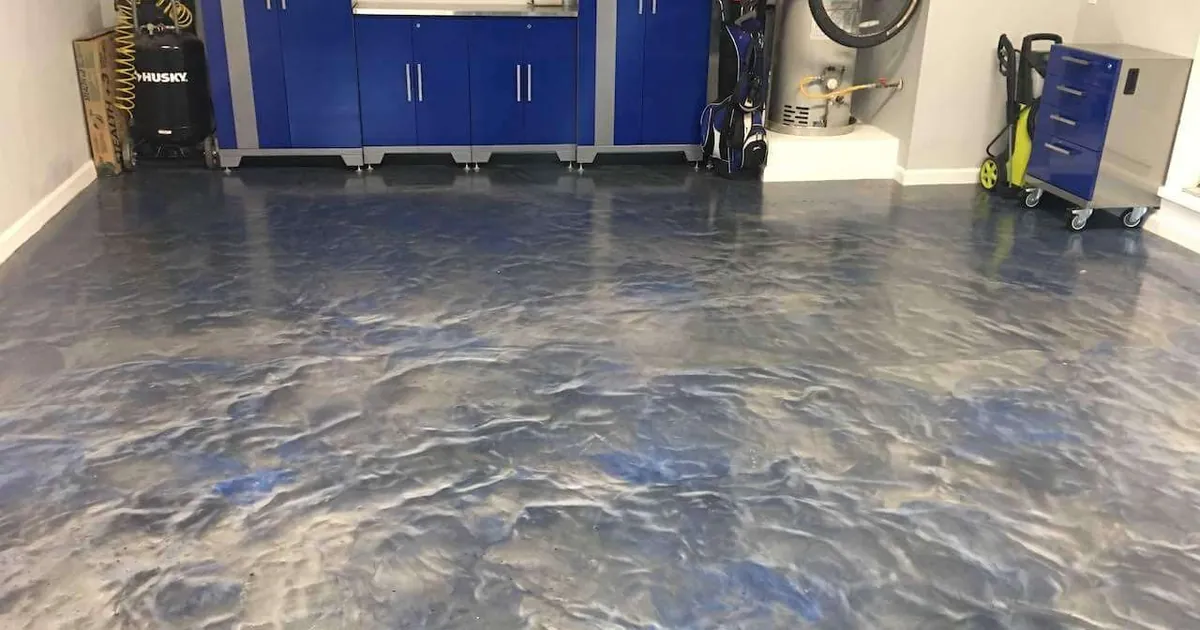
A garage floor that looked fine in October and is pitting in April did not fail because of the cold. It failed because of what the vehicle carried in.
Road salt and deicing chemicals arrive in the wheel wells and undercarriage of every vehicle parked in a northern garage all winter, melt onto the slab, and go to work on it. By the time the damage is visible, it has been developing for several seasons.
What actually happens to the concrete
Three mechanisms run at the same time, which is why the damage is worse than any one of them would suggest.
- Salt scaling. Chloride solutions lower the freezing point of water and change how it moves within the pore structure of concrete. A slab saturated with salt solution and then subjected to freezing suffers far more surface damage than the same slab saturated with plain water. A garage is not a freezer, and the floor near the door swings across freezing repeatedly through a winter.
- Crystallization pressure. As the slush melts and the water evaporates, salt crystallizes in the pores just below the surface. Those crystals grow, and the pressure lifts the surface paste off. This happens whether or not the slab freezes, and it is the reason heated garages are not immune.
- Chloride at the reinforcement. Where chlorides penetrate deep enough to reach reinforcing steel, they break down the passive layer that protects it and corrosion begins. Corroding steel expands, and that expansion cracks concrete from the inside. The parallel on exterior structures is covered in anti-corrosion concrete treatment for parking decks and exterior slabs.
Why it shows up where it does
The damage pattern on a salt-affected garage floor is distinctive and it tells you the cause. It concentrates where vehicles park, particularly under and behind the wheels, because that is where the slush falls. It is worst near the door, which sees the most temperature swing and the most water. It follows the drip line of the vehicle. And it frequently appears as pitting and surface loss rather than cracking, which is the signature described in concrete surface repairs for flaking, pitting and spalling. A floor damaged uniformly across the whole area is usually telling you something else, more likely a finishing problem at the original pour or a moisture issue.
Why sealing alone often disappoints
Many owners respond to the first signs with a sealer, and the result is mixed for a reason worth understanding. A penetrating sealer reduces absorption, which genuinely helps. It does not stop chloride that is already in the slab, it does not bridge an existing crack, and it wears, which means it is a maintenance item on a cycle rather than a permanent measure. The scope of what sealing does is set out in when to seal a concrete floor.
Applied to a sound floor before damage starts, a sealer is a reasonable and inexpensive measure. Applied to a floor that is already pitting, it is a cosmetic treatment over a developing problem.
What a coating does differently
A bonded resin coating does something a sealer cannot. It creates a continuous barrier that chloride solution does not penetrate, so the salt never reaches the slab in the first place. Several conditions apply.
- The coating has to be continuous and intact. A gap, a pinhole or a failed edge lets solution under the film, where it is trapped against the slab and concentrated rather than evaporating. That is worse than no coating at all.
- The slab has to be sound first. Coating over surface that is already delaminating buys nothing. Damaged areas are removed and repaired before anything goes down, which is the sequence in garage concrete resurfacing for cracked and spalled floors.
- Preparation determines everything. This is the single biggest factor in whether a garage coating lasts, and it is covered in how surface preparation determines long-term results.
- Joints and the slab edge need detailing, since those are where solution enters a floor that otherwise looks continuous. That is covered in expansion and control joints in coated concrete floors.
The system choice is a separate question, compared in epoxy versus polyaspartic versus polyurea garage floors.
Things that help regardless
Several measures cost little and make a real difference, coating or not. Rinse the floor during winter when a thaw allows it, which removes the salt rather than letting it concentrate as the slush evaporates. Use containment mats under parked vehicles, which catch the slush and are then emptied outside. Keep the floor sloped toward the door or toward a drain, so meltwater leaves rather than pooling. Improve ventilation, since a garage that stays damp keeps the salt in solution and active. And avoid applying deicer to the garage floor itself, which some people do to clear ice near the door. None of these replaces a sound floor with a sound surface, and all of them extend the life of one.
Timing a repair
Spring is when the damage becomes visible, and it is also the right time to act. Repairing and coating in spring or early summer gives the work the whole dry season to cure and settle before the next winter. Waiting until late autumn compresses the schedule, and temperature and humidity at that point can limit what can be installed. The seasonal argument is in timing is everything, why fall and winter are prime for indoor epoxy projects, which applies to conditioned interior spaces, and a garage is frequently not one.
Waiting also costs more in scope. A floor with light pitting is a repair and a coating. The same floor after two more winters may need significant surface removal first.
What belongs in the assessment
A map of the damaged areas and their depth. Whether any area is delaminated rather than simply pitted, which is checked by sounding. Whether cracking is present and whether it is active. The condition at the door, the joints and the slab edge. Whether moisture is coming up through the slab as well as down onto it, which is covered in the hidden cost of moisture under floors. And what is being removed, what is being repaired, and what system goes over the result. Our garage work is on the garage floor and concrete garage floor repair pages.
Frequently asked questions
Why is my garage floor pitting when it never gets rained on?
Because the vehicle brings the water in, loaded with road salt. The slush melts onto the slab, the water evaporates and the salt crystallizes just below the surface, and crystal growth lifts the paste off. Near the door the slab also swings across freezing repeatedly, which makes salt scaling worse. The damage concentrates under and behind the wheels, which is the giveaway.
Will a sealer stop salt damage?
It helps on a sound floor and it is not a cure. A penetrating sealer reduces absorption, which is worth doing before damage starts. It does not remove chloride already in the slab, it does not bridge existing cracks, and it wears, so it is a maintenance item on a cycle. On a floor that is already pitting it is a cosmetic treatment over a developing problem.
Does a coating actually prevent it?
A continuous bonded coating stops the solution reaching the slab, which is the whole mechanism. The conditions are that it has to be genuinely continuous, the slab has to be sound before it goes down, preparation has to be done properly, and joints and the slab edge have to be detailed. A coating with a gap in it traps solution against the concrete, which is worse than none.
My garage is heated. Am I safe?
Not entirely. Heating removes the freeze and thaw part of the problem and leaves the crystallization part, which happens as the meltwater evaporates and the salt concentrates in the pores. A heated garage can also keep the floor damp for longer, which keeps the salt in solution and active. Rinsing during thaws still matters.
When should repairs be done?
Spring or early summer, once the damage from the winter is visible. That gives the work the whole dry season to cure and settle before the next winter, and it avoids the temperature and humidity limits that can constrain a late autumn installation. Waiting also increases the scope, since light pitting becomes significant surface removal after another winter or two.